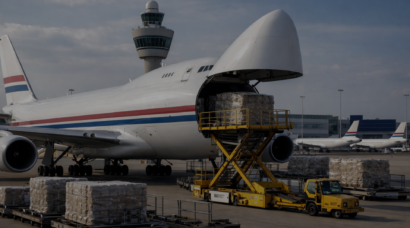
Artificial Intelligence in logistics.
AI (Artificial Intelligence) is playing an increasingly important role in the logistics sector and offers numerous opportunities to improve processes, increase efficiency and reduce costs.
Here are some key application areas of AI in logistics:
Route optimization: AI can help calculate the most efficient routes for transportation vehicles, taking into account factors such as traffic, road conditions, delivery schedules and fuel consumption. This reduces transportation costs and improves delivery time.
Inventory management: AI can use predictive analytics to determine optimal inventory levels, taking into account seasonal demand, delivery times and other variables. This minimizes excess inventory and shortages.
Predictive maintenance: AI can analyze sensor data from vehicles and equipment to predict potential failures before they happen. This reduces unplanned downtime and improves the efficiency of maintenance activities.
Warehouse management: In warehouses and distribution centers, AI can help optimize storage locations for goods, making products easier to access and order fulfillment faster.
Predictive delivery: AI can analyze data to predict when customers are likely to place an order. This allows companies to pre-position inventory and plan delivery to meet expected demand.
Track and trace: AI systems can provide real-time tracking for shipments, allowing both businesses and customers to track the location and status of packages. This improves visibility and transparency in the supply chain.
Automation of tasks: Robotics and automated systems using AI can automate routine tasks in warehouses and distribution centers, such as picking and packaging.
Quality control: AI-based vision and image processing systems can be used to check the quality of products and packaging, identifying and removing defective items.
Market demand forecasting: AI can analyze large amounts of data to predict market trends and consumer behavior, which can help plan inventory levels and marketing strategies.
Risk management: AI can help identify potential risks in the supply chain, such as natural disasters, political instability or logistics bottlenecks, and help companies better prepare for these events.
In short, AI plays a crucial role in optimizing logistics processes, improving efficiency and providing greater insight and control across the entire supply chain. It enables companies to respond more quickly to changes in market demand and save costs, ultimately leading to improved customer satisfaction and competitive advantage.
This publication was created with the help of AI (Chat GTP).